


When you purchase through links on our site, we may earn an affiliate commission. Here's how it works. |
The EOS C50 is Canon’s next great step in its cinema camera development, combining a top of the line image sensor with useful ergonomics and a stellar XLR top handle, albeit with a few key compromises.
I’m going to be honest with you, this was a hard review to write. I’ve had the Cinema EOS C50 in my hands for a while, and it immediately stood out as the most useful cinema camera that Canon has ever released.
I’m not going to call it “the best,” because hyperbolic camera reviews are cringeworthy and cliche, but also because the EOS C50, for all it’s doing right, has a couple major oversights in its design that might turn you away from purchasing one.
No headings found on this page.
However, if we can agree that “the best” and “most useful” are two distinct yet equally-valid criteria when judging a camera package, then what you’ll find is that the EOS C50 can not only handle anything you throw at it, but it will do so at a higher level of performance than any mirrorless camera on the market.
This review series is sponsored by the good people at Midwest Photo. Thanks again to Ken and the team for providing a loaner unit.
TL;DR: It's almost perfect
Like I mentioned in my initial first impressions, the Canon EOS C50 is a pretty fantastic camera. I was able to use the camera on several “content creator”-style shoots, which is, in my opinion, the type of situation this camera was designed to excel in. Needless to say, I had a stellar experience with it.
In this video above, I paired the EOS C50 with my R5. You can (likely) immediately tell the difference in terms of sharpness, color, and the lack of IBIS wobble.
What stood out to me though is how it simply “works.” It's designed to just get the job done, which is such a welcomed change of pace for a camera industry that has been trying to ‘out-spec' each other for more than decade.
I would 100% use the EOS C50 again on a job. Unfortunately, for a few reasons I'll get into below, I decided to purchase a much-discounted R5C to pair with my R5 for the time being.
Some Thoughts About “Image Quality”
Alright so just to get this out of the way, my thesis for this article is that the image quality coming from the EOS C50 is probably the best that Canon has ever produced. Colors are stellar. Subjects are tack sharp. The dynamic range is enough to make every YouTuber lose their damn mind (I don’t actually know what the numbers are, but needless to say, I can imagine they’re quite good.).
Essentially, I’m coming from the perspective that “image quality” is no longer a conversation that needs to happen. Every camera is great. I’m sorry to break the news to you if you’re not already in the know.
This kind of makes cameras boring to a certain degree these days. All of them can do it all. All of them can be used to sculpt and craft beautiful portraits and stunning landscapes. They’re all capable of producing Hollywood-level feature films and television shows despite the fact that today’s internet creators will never attempt such a thing.
Side note: I tell all my students at Rutgers University that the cameras we have available to us, including the ones in our pockets attached to our smartphones, are more technologically powerful than anything Stanley Kubrick or Charlie Chaplin ever used.
The point of judging a camera is to assess if it’s capable of doing the thing you need it to do, rather than judging it against three other cameras in a side-by-side arrangement of a guy in total darkness backlit by an open sunny window.
Canon C50 Image Quality
I’ll be quick, but this is probably the section you’re most interested in. The Canon EOS C50 image is quite perfect. The colors are rich, and the dynamic range held up in both daylight and dimly-lit tungsten environments.
C-Log 2 is a welcomed inclusion for a camera at this price range. The price-to-image conversation is a major part of where this camera occupies the market, and the EOS C50 gives many dedicated photography-first mirrorless cameras a major identity crisis whenever they’re switched into photo mode. Gone are the days of the EOS 1D C and its $12,000 price tag for 8-bit 420 Motion JPEG 4K video.
The 7K Raw is more than anything you will need. 4K 120 is sharp and crispy. I didn’t test the 1080 or 2K to see if it’s mushy like previous generation cameras have been, though honestly if you’re buying a EOS C50, you’re not shooting in HD. Rolling shutter in all modes is well contained as well.
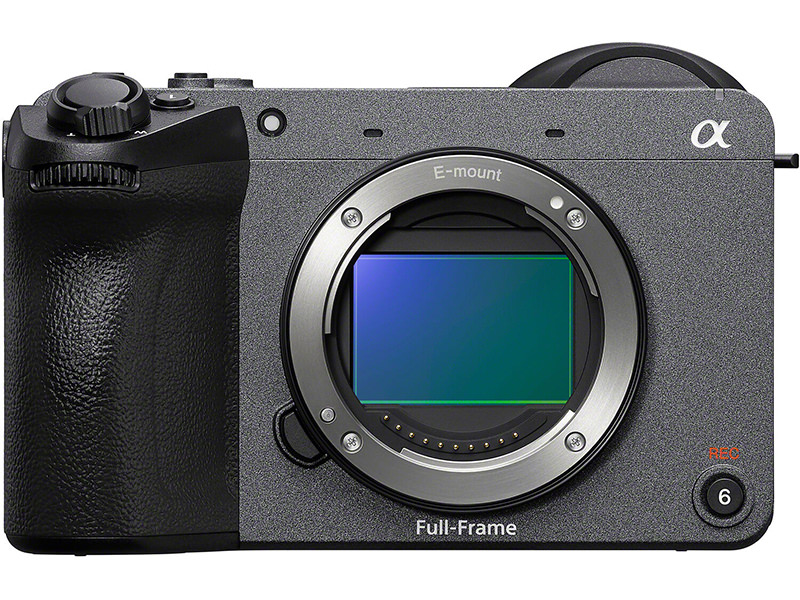 Sony FX2
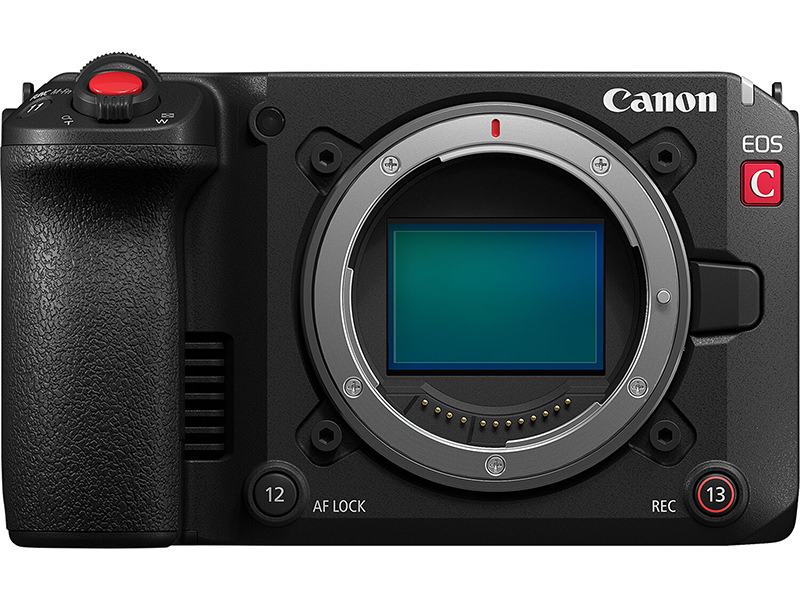 Canon EOS C50
ISO Performance
The blacks and the highlights of the EOS C50 rendered quite nicely. Due to the second base ISO being set to 6400, I felt that the often-usable ISO ranges of 3200 and 4000 to be a smidge noisy, but thankfully the image grain pattern of the camera is actually really pleasant. It’s filmic, for whatever weight and merit that word carries.
I guess that’s maybe one of the few gripes I have about this camera, as it pertains to Canon’s design philosophy for the sensor at the core of the EOS C50 and R6 Mark III. Two generation of sensors prior, with the EOS R5 and R5C (I just bought one finally!), the high-base ISO was set ISO 3200, and I personally felt like that was a great sweet spot for indoor scenes and relatively well-lit exterior nighttime situations.
What Is A Good High ISO?
ISO 6400 presents a bit of a challenge due to how much higher it is than the lower base of ISO 800. Both the EOS C50 and the R6 Mark III deal with this conundrum. This sensor is without a doubt incredibly strong at ISO 6400. The noise cleans up in a significant way, but my broader questions are what ISO 6400 is truly useful for in terms of practical shooting situations.
Because as a cinema camera, one would assume that a filmmaker packing the EOS C50 in their kit is either fully prepared for the environment they’re shooting in, or so unequipped they’re going to bring the camera that can handle the kitchen sink being thrown at it.
I wish this new sensor kept the R5 Mark II’s second base of ISO 4000, at the highest. ISO 3200 in my opinion is a perfect sweet spot of usability in most situations, and 6400 at a base of ISO 3200 is pretty darn clean in my opinion.
It’s the unfortunate situation where ISO 5000 is perfect for your nighttime, practical-lit indoor scene that setting at 2nd base at ISO 6400 causes some serious stress on the sensor due to the noise and grain that occurrs one stop under your 2nd base ISO.
Using The Camera In The Field – Build and Ergonomics
Buckle up boys and girls, let’s get into it. The build of the EOS C50 is a Schrodenger’s Cat of performance and annoyance.
What's Good?
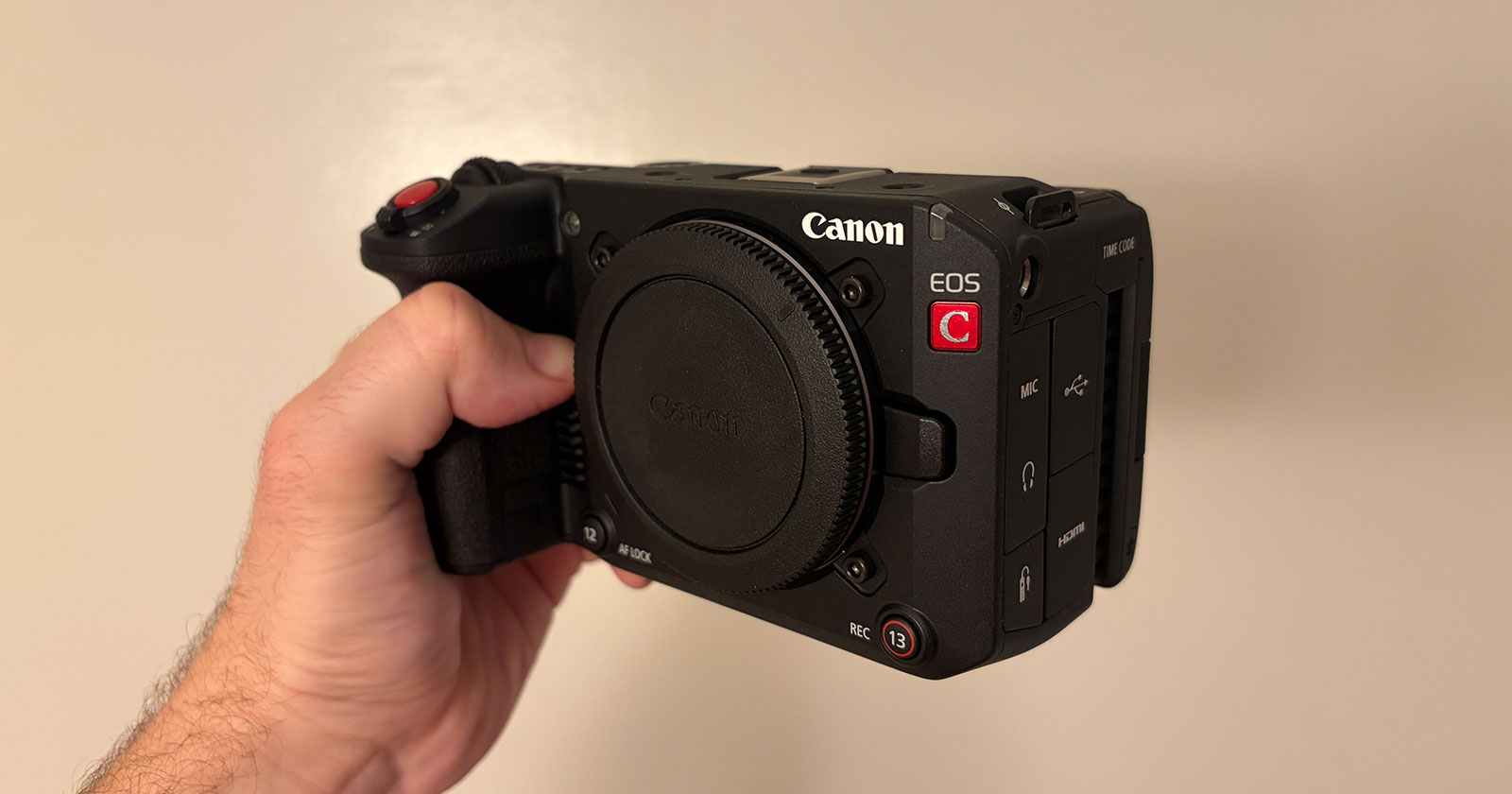
Everything about using the C50 makes sense from a video shooter's perspective. Almost…
The buttons are all in the right place, with great press-action and convenient labels for their default functions. Though, you can easily (thankfully) custom map just about anything you want to any button on the camera, which is great for those running multi-camera shoots and wanting muscle memory to rhyme from one device to another.
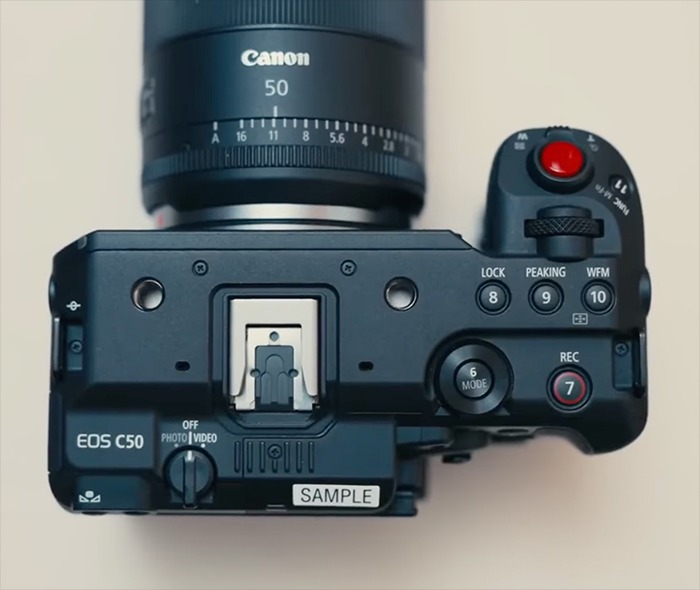
For anyone who has used a R5, R5C, or R6; you will feel right at home in terms of how this camera handles. For those who are coming from older Cinema EOS models like the C300 line or the C70; it will feel closer to what you would imagine shooting with a hybrid-style mirrorless would feel like, save for the headache of a worse menu experience for professional video.
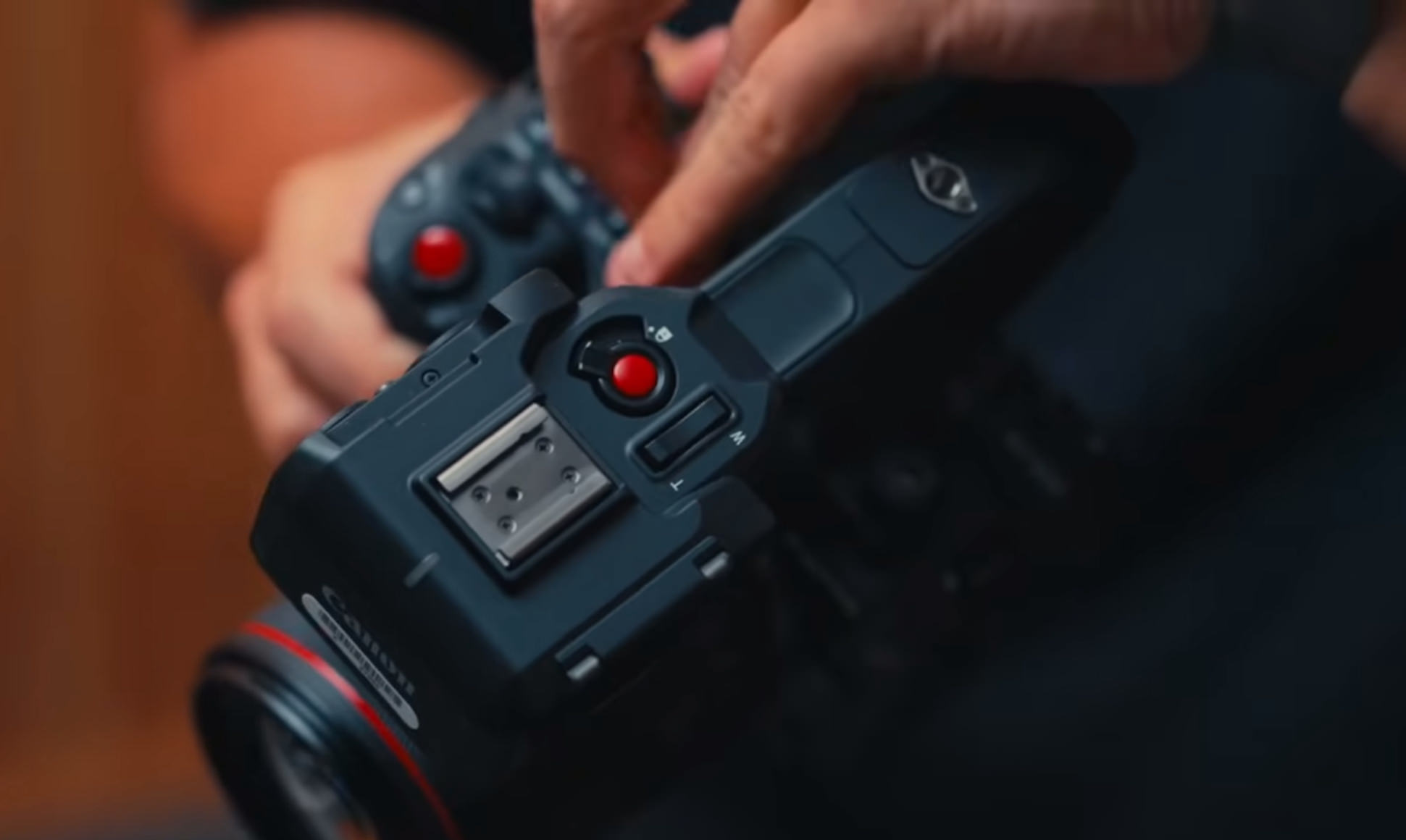
This XLR handle is the greatest innovation that Canon has produced in a long time. More than the Smart Interface Shoe. More than the LP-E6P battery. More than the ND Filter adapter. The handle that comes with the EOS C50 makes this camera worth its almost-$4000 price tag alone.
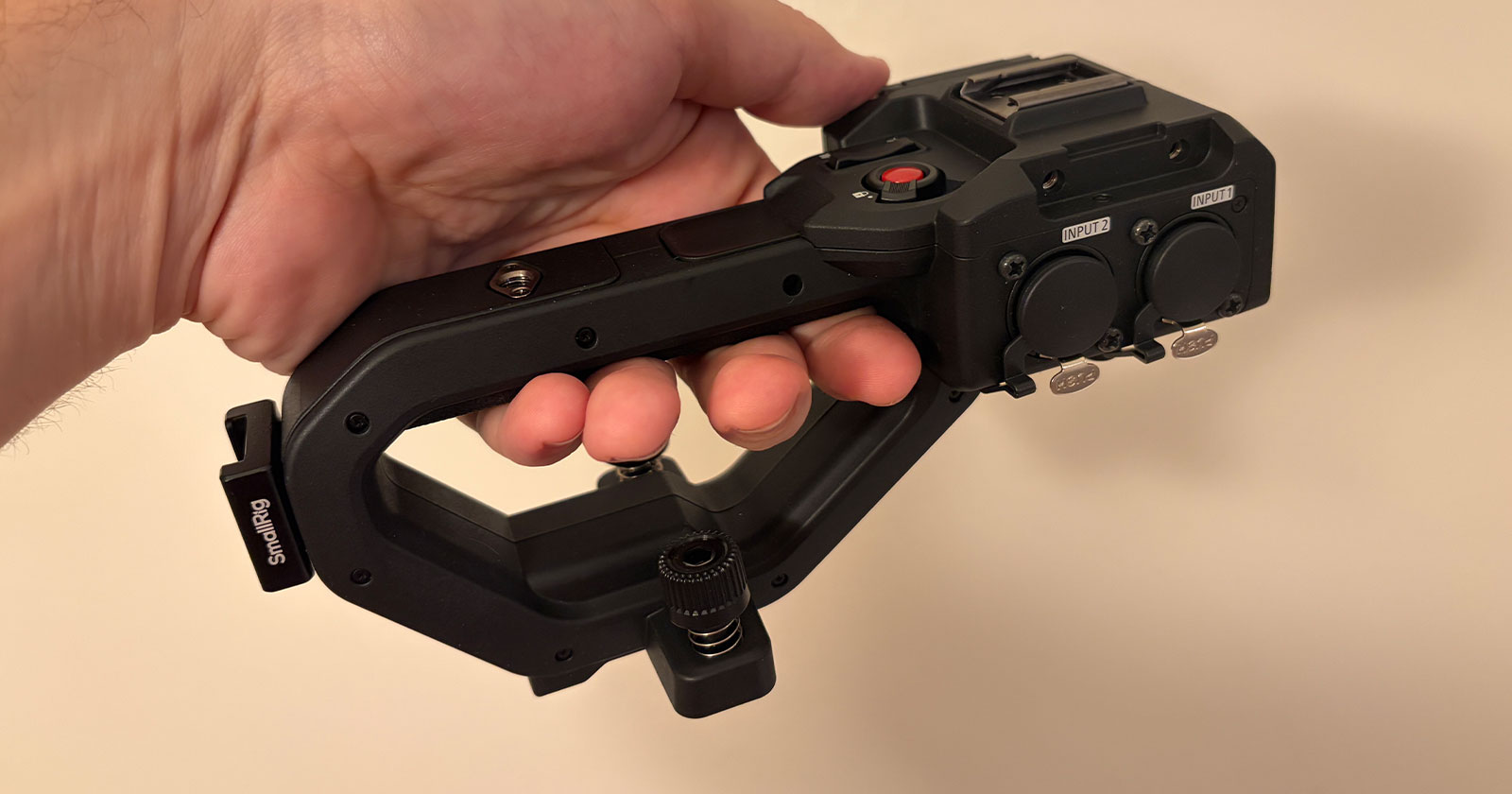
What's great about it is that not only do you get to avoid the annoyance of using a SmallRig cage on your camera with their very heavy and metal-feeling top handles; but you also get the peace of mind knowing that it's not going to come loose on you.
The implementation of full-sized XLR inputs on this camera combined with the internal XF-AVC S codecs allow for excellent 4-channel audio input. I can't understate how important something like this is in a multi-cam, multi-subject shoot in the field.
This allowed me to have two subjects mic'd up via a 3.5-inch audio receiver, along with two channels of shotgun mic audio from the top handle.
What's Not So Good?
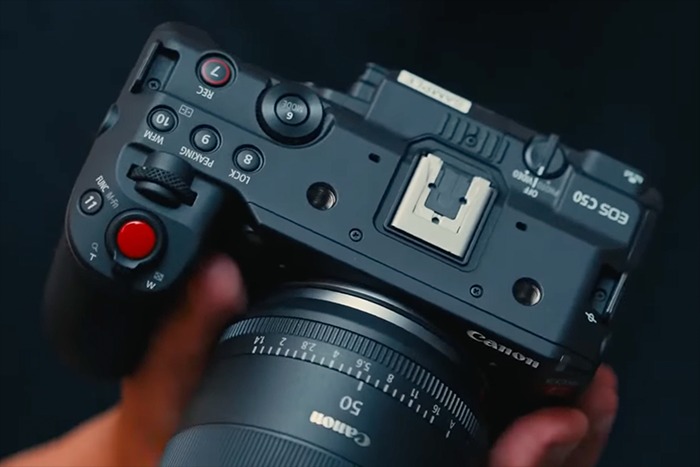
The lack of a viewfinder on the EOS C50 might just be enough of a reason to not purchase one. At least, to not purchase one at this price point. After using it on multiple situations like the videos linked above, what became clear to me was that outdoor shooting was all but impossible.
Why Canon chose to put such a relatively low-quality screen on the back of the EOS C50 is beyond me. I'm sure price was a big factor, but I can understand that kind of decision when looking at the R6 Mark III, which shares the same screen. That's a $2800 camera that punches far above its weight class.
At more than $1000 more, the EOS C50 should feel like a step up in terms of usability. In many ways it is of course, but in one key metric, it falls quite short.
What's the point of all this power under the hood if you can't see what you're shooting in broad daylight?
Would I Buy One?
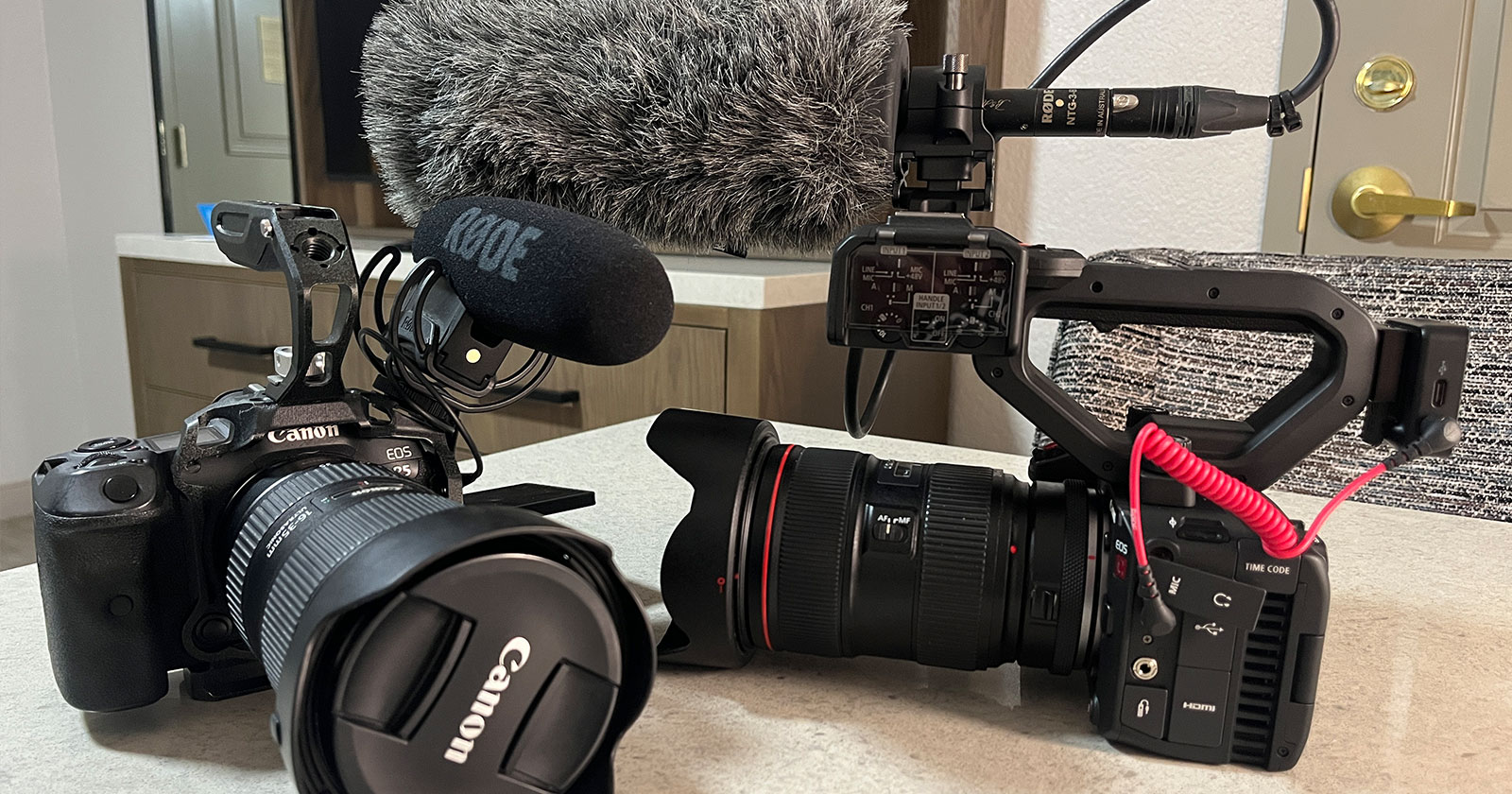
The short answer is “Yes!”
The more complicated answer is “No I didn't.” I think this comes down to your shooting style and what you immediately need out of a camera purchase.
If money wasn't a factor, I would arm myself with a fleet of EOS C50's along with lightweight Atomos Ninja screens. The C50 is a perfect “toss it in a bag” camera that works with very little setup or rigging in order to make work.
That's the beauty of this camera. It just works.
On the other hand though, in my personal experience, I knew that purchasing the C50 would almost-definitely ruin the usability of my R5 on shoots. As you can see in both videos I've shared above, the C50 excels visually in every way. So much so that it's very noticeable when the worse camera's footage is on screen.
In Short, the Canon C50 is Too Good for me Right Now
I decided to instead purchase a R5C in order to capitalize on many of the improvements that come with the Cinema EOS operating system without sacrificing the longevity of the camera I already own. The ability to match footage on a multi-camera shoot is important, and what good is purchasing a new camera if you have to then purchase a 2nd new one?
What I Hope To See From Canon In an “EOS C30”
The EOS M6 Mark II (oh man, remember those days?) had a genius implementation of an optional EVF attachment. If I'm recalling correctly, I believe the C300 Mark III and C500 Mark II also had an optional EVF attachment for their unibody design.
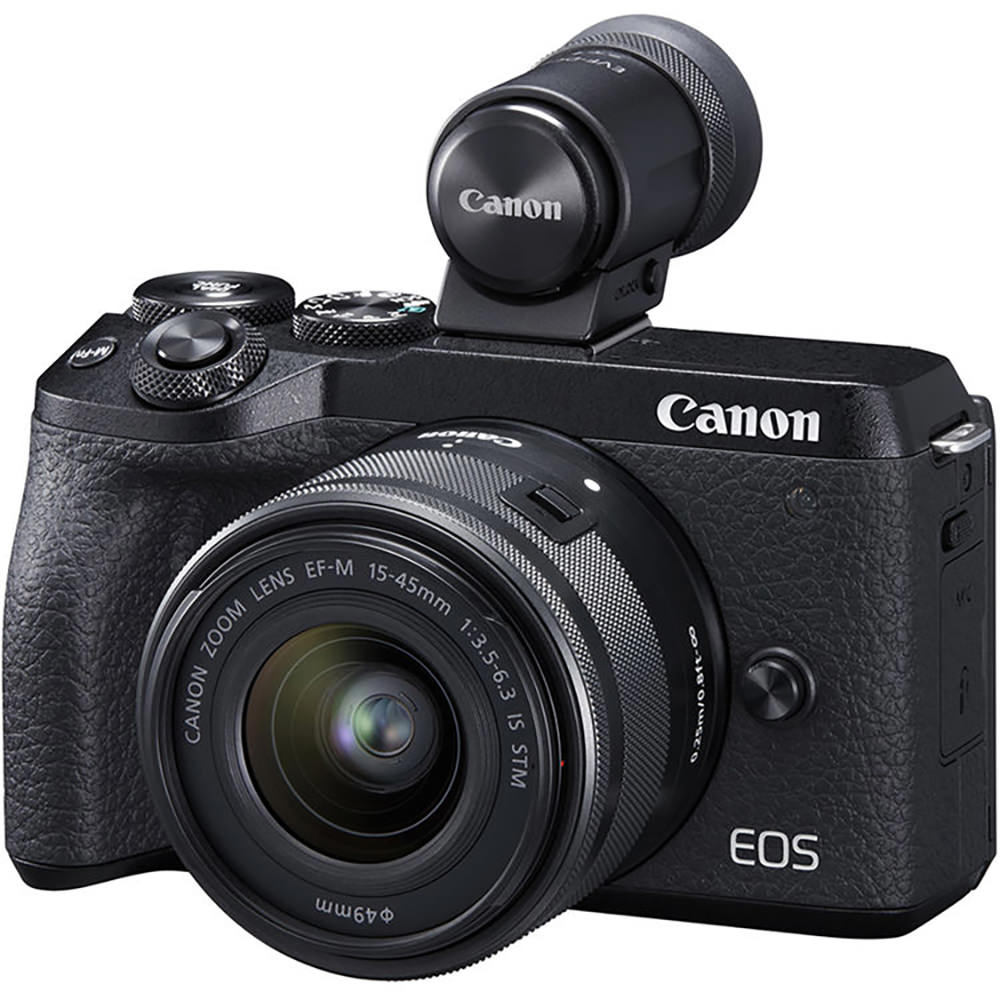
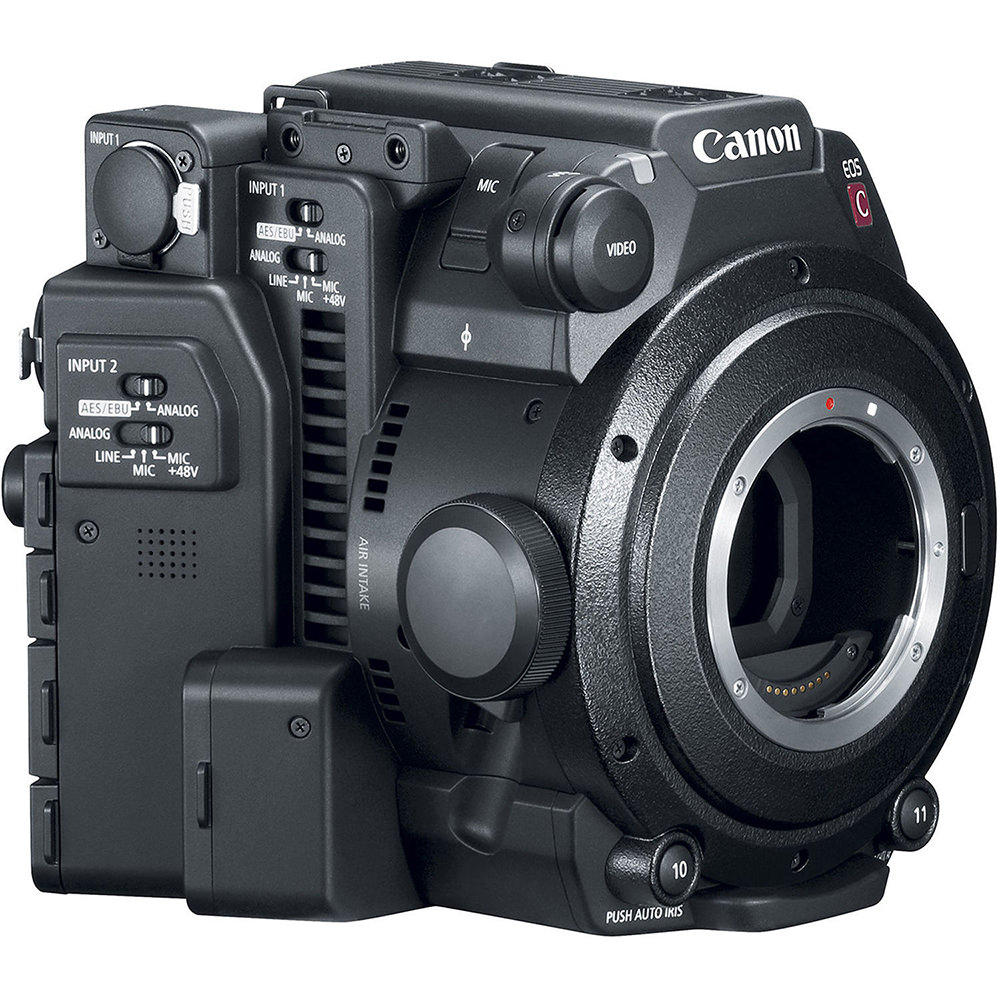
If Canon is going to continue to develop in this hybrid creator space of cinema cameras that toe the line between mirrorless creator tool and full-featured cinema camera: give us an EVF. Even if it's something like the C200 where there's an EVF and Non-EVF version of the camera, it's always appreciated to have the choice.
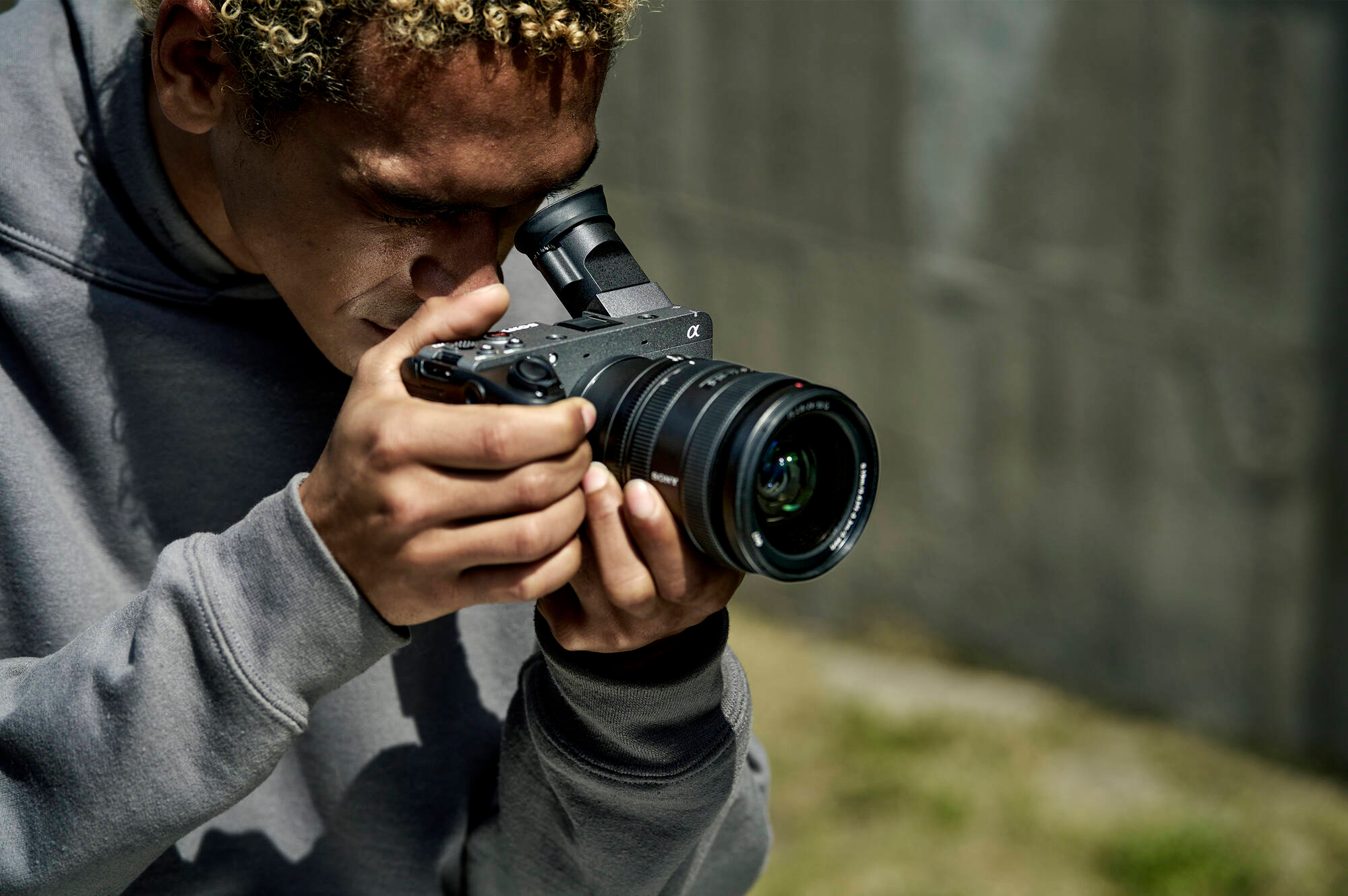
I'm not out here to say that the lack of an EVF is the only reason I didn't purchase the EOS C50 this time around. Price was a big factor, but like I said, upgrading to the C50 would have forced me to update the rest of my camera system and I wasn't ready for that just yet.
If the C50 is the cinema variant of the R6 Mark III, I would love to see whatever “C30” camera Canon develops that is a cinema variant to the R8. If Canon would give the R8 (and R6 Mark II)'s 24mp sensor the Cinema treatment with the Cinema menu, a fan, LP-E6P battery, and a removable EVF; oh boy that would be great.
No need for 7K Open Gate. Just a nice 6K downsample, Long GOP flavor of 4K that could serve as a gateway drug for the Cinema EOS system without breaking the bank.
And if they made that removable EVF backwards compatible with the C50: that's a home run.
Pros & Cons
CANON CINEMA EOS C50 PROS & CONS
Conclusion
There's not much to say against the EOS C50. As I mentioned at the top, it's pretty darn close to perfect. The image quality is the best Canon has ever produced, and its excellent form factor makes it an incredibly versatile tool for all types of production.
If money wasn't an issue, I would consider buying three of them and retiring my R5 from video work entirely. And I can't stress enough how flawless the implementation of the XLR handle is for a camera in this class. Proper audio capture has been long overlooked by the camera industry.
However, at almost $4000, the lack of an EVF and/or a higher-resolution LCD is such a glaring omission that I have to wonder why I would purchase one over a R6 Mark III at about $1000 less. Obviously they're two different types of cameras for two different types of creators, but still—it begs the question.
In general, I see the EOS C50 being the template for all of Canon's future video cameras, which is very exciting for all of us. There are a few quality of life improvements that hopefully Canon will iterate on in future models, but even with its current quirks, the C50 is a great choice for just about any kind of video job.




The C50 has many interesting features and should push Sony to add more to the FX3 II, but come on...there is absolutely nothing "top of the line" about the sensor.
"The EOS M6 Mark II (oh man, remember those days?) had a genius implementation of an optional EVF attachment."
I do remember those days, especially when traveling with two of them.
Well-written review; nice contribution to CR.
Still no data to support your lie? Yeah, not surprised.
Real world reviews are opinion and you try and provide decision points without telling someone what to spend their money on.
But the lack of EVF was almost a deal breaker, but I own a Kinefinity EVF so I made the plunge.
The screen is simply ridiculous and nearly useless and I would be unable to use this camera without my external EVF.
The AF is amazing in many ways, and has changed how I film birds, but also frustrating for one main reason: if shooting in continuous AF there is no temporary override that allows MF without the AF frames jumping all over the place in situations where there are multiple possible targets (like shooting birds). maybe a firmware upgrade can fix.
The other huge frustration: Canon seems to have made it difficult for 3rd party monitor companies to have proper wired control of the camera (similarly to the challenges with monitor-based control of the R5c.) Portkeys is developing wi-fi based control, but that is inferior to wired and it can't use the C50's full range of AF features like AF tracking. So it's a hampered camera for now in that regard.
With a real EVF/screen and proper communication protocols with external monitors this camera would be almost perfect for my needs.
You’re not missing anything sticking with the R5C, and being able to lean in and see the image through the viewfinder is essential for critical moments like at weddings.