

When you purchase through links on our site, we may earn an affiliate commission. Here's how it works. |
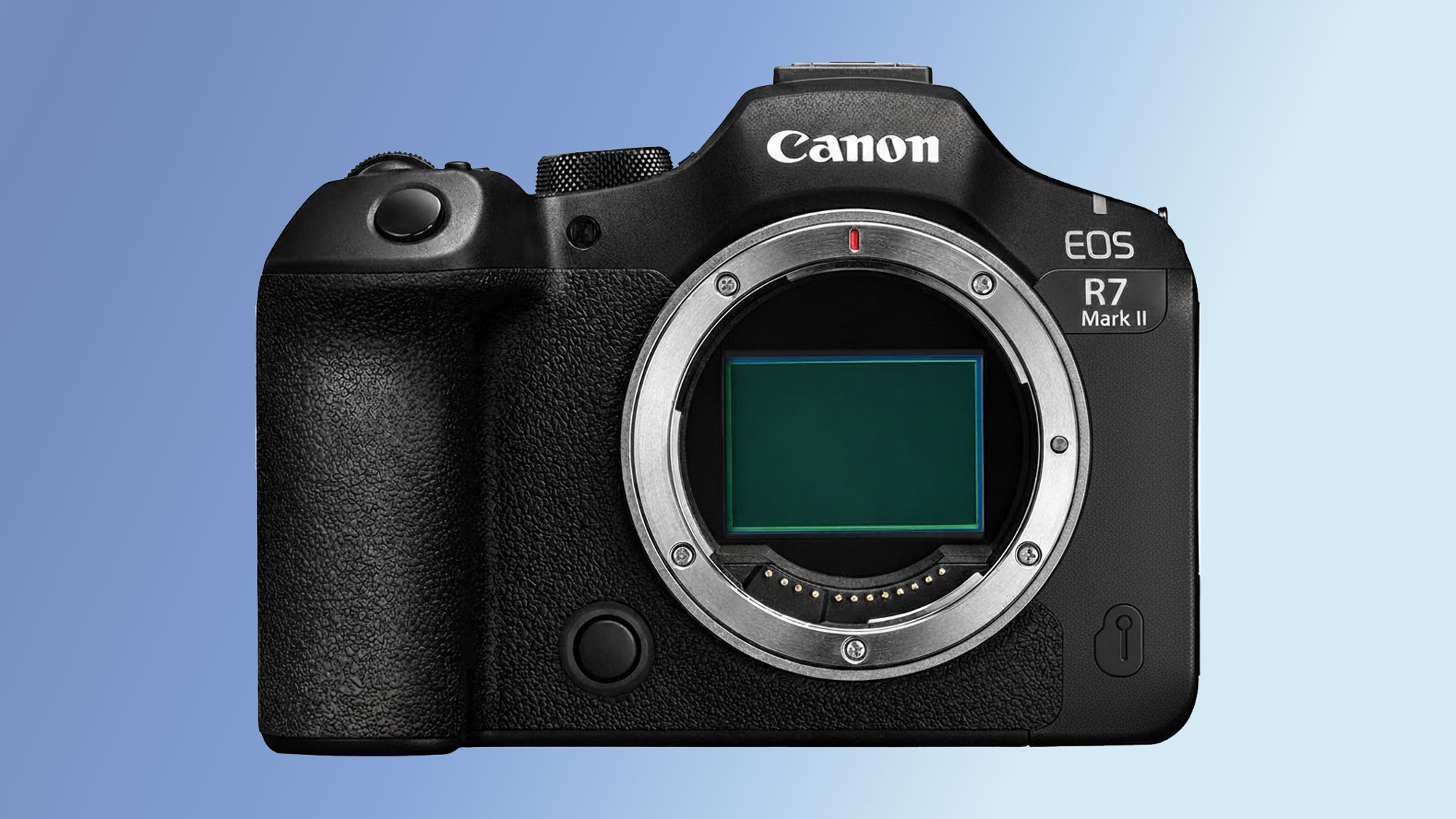
I have been writing a fair bit about the EOS R7 Mark II in recent weeks, and with good reason. It's good clickbait, and many people who may be interested haven't been following along yet..
That said, I am trying to be as truthful as I possibly can while stoking the rumors. A little hype isn't a bad thing, especially if you're looking forward to the follow-up to the much-loved R7.
I don't have any new information that I personally have a lot of confidence in, but I'm also not dismissing any of it. We'll see what we can pull out of the quiet sources out there.
Canon EOS R7 Mark II Rumored Specifications Round-up
- 39MP BSI Stacked Sensor
- Sensor speed close to the EOS R5 Mark II (or faster)
- DIGIC Accelerator May be required to achieve the sensor readout speed
- 40fps Electronic Shutter
- Pre-capture
- Body ergonomics close to the EOS R6 Mark III
- Dual Card Slot (SD / CFexpress Type B)
- LP-E6P Battery
- “Much higher” launch price than the R7 R7 launched at $1,499
- No information about video features at this time
- Announcement expected late May or early June 2026
Things are Looking Good
All of this thus far could probably be seen as logical conclusions. There is obviously going to be feature overlap with Canon's full-frame cameras. However, I do believe there will be a big surprise or two feature wise. I have been sent some possibily over the top features that the EOS R7 Mark II will have. I'll hold onto those for the moment.
I think this camera will have more leaks than a camera like the EOS R5 Mark II, which was locked down tighter than any camera that I can remember. I know it has been “in the wild,” but not with widespread usage.
With the return of supply chain issues in the tech world, I would temper expectations for the May or June announcement. Who knows what may happen?
I won't do another round-up until I have more to tell you.








The most obvious way to eliminate features or lower prices is to use a partially stacked sensor rather than fully stacked. Which they may do. But in the article they're very explicitly indicating a fully stacked sensor with R5II level readout speeds - not partially stacked with R6III readout speeds. Canon may be able to squeeze a bit and target something like $2299 rather than $2499+, but I think that if they wanted to stay under $2000US they wouldn't be looking at a fully stacked body.
In my view the most interesting aspect is the use of the 39MP sensor that matches 8k UHD requirements and would seem to indicate intent to deliver significant video features. Canon's APS-C lens lineup doesn't really seem to justify positioning it as a comprehensive Super35 platform, though. Are we going to see an indication of a more aggressive RF-S lens buildout, or would Canon do the usual "our FF lenses are what you should be looking at"
I don't believe the DIGIC Accelerator itself can increase readout speed, this is almost entirely driven by the sensor's internal architecture.
The DIGIC Accelerator eliminates processing bottlenecks by taking over real-time AI, AF, and exposure calculations. This allows the DIGIC X to focus exclusively on image processing, ensuring it can keep pace with the massive data stream generated by a stacked sensor.
So it should be understood the other way around: if the R7 Mark II has a stacked sensor (i.e. fast readout speed), a DIGIC Accelerator may be required to achieve 40 FPS electronic shutter and pre-capture.
Remember, the R3 did not need a DIGIC Accelerator to achieve ~5ms readout, but it topped out at 30 fps and did not support pre-capture
At the same time, the mention of some "over the top features" reminded me of a thought I had when reading an article about the R7 II last summer; that potentially the R7 II would be the first camera to be equipped with Canon's answer to the screen articulation mechanism found on the Sony α7R V and α7 III, but to circumvent their patent on the mechanism, the hinge system would potentially be swapped. Meaning that the "hind hinge" (not immediately visible) would be the one on the side, and the up- and down tilting mechanism would act as the "front hinge". Sony has implemented it the other way around. This would still allow the full range of motion, but to an on-looker, would look like an up/down tilting screen only when not flipped out. Said article from last August talked about exactly that:
Personally, such a screen tilting mechanism would be highly appreciated by me, a welcome upgrade over the flip-out-and-rotate screen of the R7 (and any other APS-C or FF Canon mirrorless camera, excluding you, R100).
If the Mark II has all these rumored features and specs, it surely is going to be a beast of a camera that will sell in record numbers.
The upgrade removed the ability to power on/off within the housing but should not be an issue as long as the camera is turned on before assembly.
The upgrade option was only offered after the new body was released so you may be in luck for an upgrade vs a new housing.
If there are major ergonomic changes in size similar to R6 then a new housing would be substantially larger.
The R7 price will go to a new lower price point and given the Ritz's big feature (and price) difference then the R7 could be selling for a long time to come.
The R5 is still on sale and it has been >18 months now since R5ii release. I don't see a good reason for Canon to stop selling the R5 for a long time to come. B&H are still selling A7v and iv and iii new at ~USD500 difference between each
I don't think I will trade R7 for R7ii, just keep R7 as my backup.
I think Canon has skipped the numbering, and considers the "X" in "DIGIC X" to be part of the name of their processor type (or a "platform name"), not a version number. Also the processor has already been updated several times since its launch in 2020.
I vaguely remember Canon saying the "X" is part of the name now, back in some interview when it launched.
But versionnumber or not. Better battery life would of course always be very welcome.
I get the impression than instead of doing the same thing, but at less power, Canon cranks up the AF speed. So you end up with pretty much the same CIPA rating, even if the chip is vastly more efficient.
I would hope that Canon will choose to extend battery life with newer models, but I fear they want bigger numbers in other areas.