


When you purchase through links on our site, we may earn an affiliate commission. Here's how it works. |
Canon has shared new insights into its compact camera plans in interviews at CP+ 2026 in Yokohama, Japan, as reported by DPReview. In one of the most important statements given to DPReview, Go Tokura, Canon's Executive Vice President and Head of Imaging Group, was quoted as saying,
The current customers of compact cameras are not really our past customers. These are totally new customers. So it is going to be the role of the next camera we release that can offer new technologies or a new use case. That's the new role of the next compact camera.
This quote in itself is a surprise; it's very rare for Canon to come out and state something so clearly.
I found it somewhat curious that they don't mention leveraging more from the Powershot V1, which indeed had most of Canon's updated technologies from sensors, optics, and processor, but the camera was very much tuned to video operations.
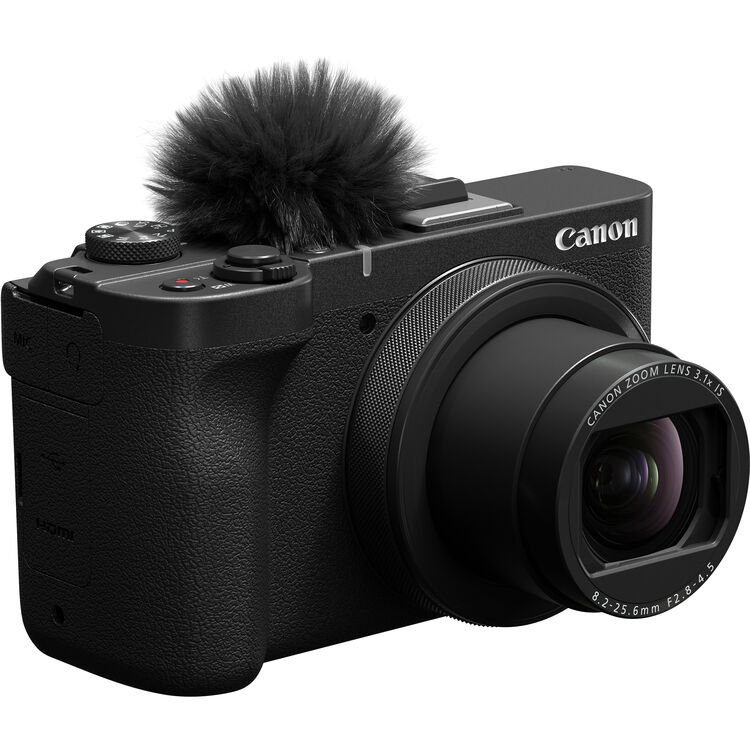
What dpreview and Canon have stated is very close to some of the points we have discussed here on Canon Rumors. In an article published on October 31, 2025, “Compact Camera Revival: Where is it?”, we pointed out that there is still great demand for compact cameras, as evidenced by the prices of second-hand cameras, with some of the current top models, such as the PowerShot G7 X III, selling for $1000+ second-hand and $1300+ new.
Read More

As we've mentioned quite a few times, the PowerShot G7 X III is getting extremely long in the tooth and obviously does not have Canon's latest technology. Nothing could be more apparent than the G7 X using the DIGIC 8 processor that hasn't seen the light of day in 7 years.
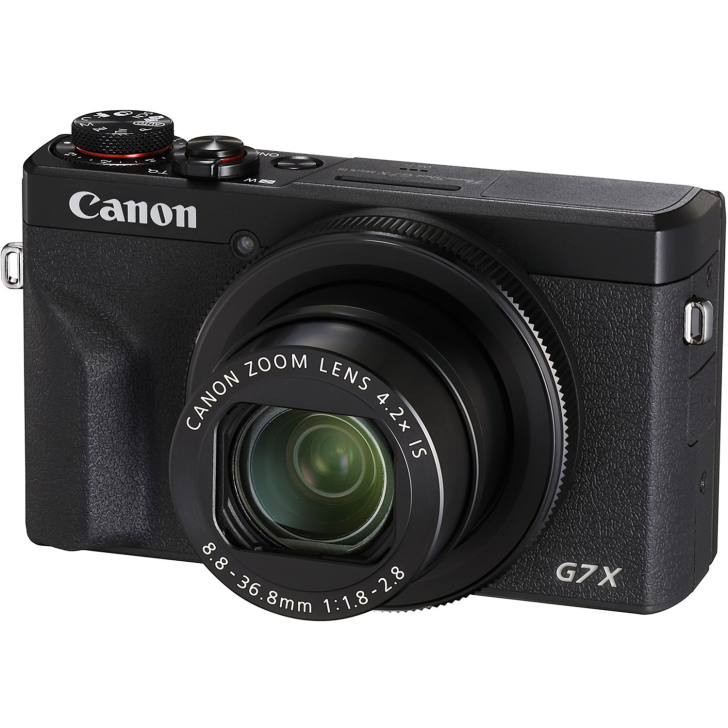
There's a demand for compact cameras that certainly isn't being met by Canon (and most other camera manufacturers). Canon's current answer is to create a reskinned PowerShot G7X III and charge an extra $400 for it.
There could be real reasons why this is taking a long time
While we can express frustration with Canon's slow approach, for all we know, many things could have happened internally to Canon to make it considerably difficult to dust off the PowerShot manufacturing and bring it back to life. I highly doubt the teams that worked on those older Powershot lines from optics, hardware, and firmware even exist today, with the last Powershot still cameras being from 2018, and only the PowerShot V10 and V1 released in 2023 and 2025, respectively, have been done since.
Another issue is the nature of the compact camera revival itself – many of those consumers don't want modern optics, sensors, and cameras. They want the old noise-ridden “grain-like” images from the older cameras – so how do you go about handling the enthusiasts that want the latest and greatest, and those that want something far less?
In reality, this market may have gotten a bit more complicated, which is maybe why Canon seems to be fumbling around in the dark. It could be they were playing chess, while we all were thinking of checkers.
It could be that this was Canon's plan with the updated Elph 360HS A and restarting the G7X Mark III production again, to handle that one specific segment that wanted the older technology, and now that they have that handled and the video segment covered with the PowerShot V1, they can freely work on a photography enthusiast camera.
What Cameras Could Canon Do?
The options at this point are fairly unlimited since they have a clean slate. If there's one advantage of having such a gap between PowerShot releases, it's that you don't have to worry about internal competition anymore. Canon can essentially re-invent how it wants to roll out new fixed lens cameras and not worry about competing with its own models.
Out of the box thinking, such as the small compact camera that makes us think about medium format waist level viewfinder cameras, would be a very interesting camera to see Canon come out with. However, that camera doesn't strike me as being one that would be extremely high tech from a Canon perspective.
If I had my wish, it would be for Canon to create at least 2 mirrored PowerShot cameras, each of the focusing on a focal range zoom that slightly overlaps but doesn't replace the other. The cameras are the same from the camera body, firmware, etc, simply different zoom lenses.
I think Nikon had the right idea conceptually with the ill-fated Nikon DL lineup, and I hope Canon takes a good look at that and does something similar. It would make sense because the traditional G7X model had a 24-100mm zoom range, and the V1 had a 16-50mm zoom range. Canon could create two camera models using those zoom lenses without many engineering hurdles from an optics point of view.
Closing Thoughts
It's certainly encouraging to hear Go Tokura state what he did. His statement was very clear, and it left no room to doubt that Canon is going to release a new fixed lens camera that will be at least up to Canon's current level of technology. When this will happen remains to be seen, even though the latest rumors are suggesting something happening this year.







I've also noticed that I would want it to be quite small and somewhat well-priced, because at Fuji X100 sizes and prices adding an R8 to use with my RF28mm F2.8 is cheaper and more versatile; and that package isn't that much larger than the Fuji.
I think this is made even more compelling due to the lack of weather sealing on the Fuji X100 and also Ricoh GR series. If they added proper weather sealing that could convince me to buy a dedicated compact camera in the same size range as the R8 and even at a slightly higher cost.
Granted, this doesn't help those customers who prefer 24 mm or 35 mm in focal range.
Personally, I prefer the lighter weight of the ‘engineering plastic’ used in many current L-series lenses, and the lenses feel good in the hand and don’t end up with paint chip ‘decorations’ all over.
I hope it's nothing weird like the PowerShot PICK or PowerShot ZOOM Telescope.
There are some very fine details in either knurls, crosshatch knurls or ‘concentric rings’ in the mentioned parts.
To put things into perspective, on my attachment, the white silkscreened index mark is ~0.03 inch (~0.76 mm) wide on the short dimension. (I have a steel ruler with 1, 0.1 and 0.01 inch (25.4, 2.54 and 0.254 mm) tick marks. I’m nearsighted with a -7 diopter prescription and can clearly see the 1/100 inch tick marks with my eyeglasses off.)
Or a new G5 with zoom of a 740hs and bigger sensor and raw, that would be the absolute best compact camera to have.
All we can do is wait and see what canon comes up with