

SanDisk Sounds the Alarm About Near Future Storage Price Hikes & Supply

Craig Blair
7 Min Read
SanDisk Extreme Pro Memory Cards

When you purchase through links on our site, we may earn an affiliate commission. Here's how it works.

This shouldn't come as a surprise to folks around here, but now we're being told by the source(s) of memory cards and more.


If you're in our industry, you already know that storage prices are going through the roof due to AI datacenter needs. Not only storage, but RAM, DRAM Flash Memory and a lot more in the industry will see significant price increases through 2026.

SanDisk is now sounding the alarm about what's coming as far as pricing and supply will likely go. It's not good.

It Has Already Started

They are warning that this situation is going to affect more than just memory cards. There will also be increases in DRAM Flash memory used in cameras, which will potentially increase the prices of cameras, unless the manufacturers are prepared to eat the cost of production increases.

When do they ever do that?

Larger capacity RAM and M.2 drives have already spiked excessively. The datacenters want large capacity products. This will likely also affect lower capacity cards as manufacturers focus on datacenter needs over consumer needs.

I have been told by two memory card makers that prices will see “large price increases” in the coming months. I am not allowed to name the companies for obvious reasons.

Shop Memory Cards

I Have Already Seen the Crazy

A year ago, I purchased two Corsair DDR5 128GB (2x64gb) kits. At the time, they were selling for around $350 USD for each 128GB set. That same RAM now costs $1250 for each pair. I have not seen it for less than that for quite some time. This is going to kill gaming and workstation computer builds.

I am seeing it with hosting companies. The company that Canon Rumors uses for dedicated hosting has raised some RAM upgraded plans up to $200/mth. Which is insane. That is going to raise the costs of online commerce, smaller retailers can't eat that.

I suspect we're going to see the same thing with all hosting companies eventually as well as companies like Spotify, Shopify or any other big companies doing business online.
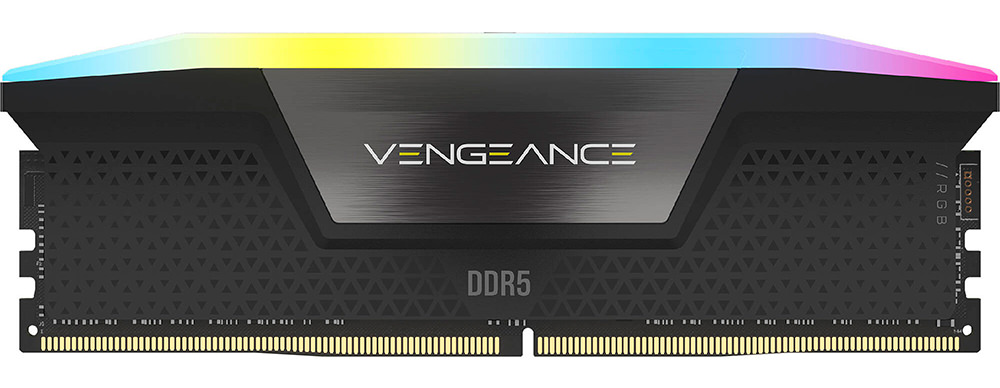
CORSAIR 64GB VENGEANCE RGB DDR5 6400 MT/s DIMM Memory Kit (Black, 2 x 32GB)
Corsair VENGEANCE DDR5 2x32GB Kit $1136 / The RGB didn't raise the price.

Google & Apple

Both Google and Apple are buying all of this stuff up like crazy I have been told. Both companies are being told that their backorders won't be filled for two years. Companies like Microsoft, Meta and Amazon are likely experiencing the same thing.

Consumer Retailers

I have been told by a couple of retailers that certain brands are cancelling backorders on memory and hard drives. It sounds like they'll be told when they can order more. That is going to hit retailers hard, there is some margin on memory products, and they are an easy upsell.
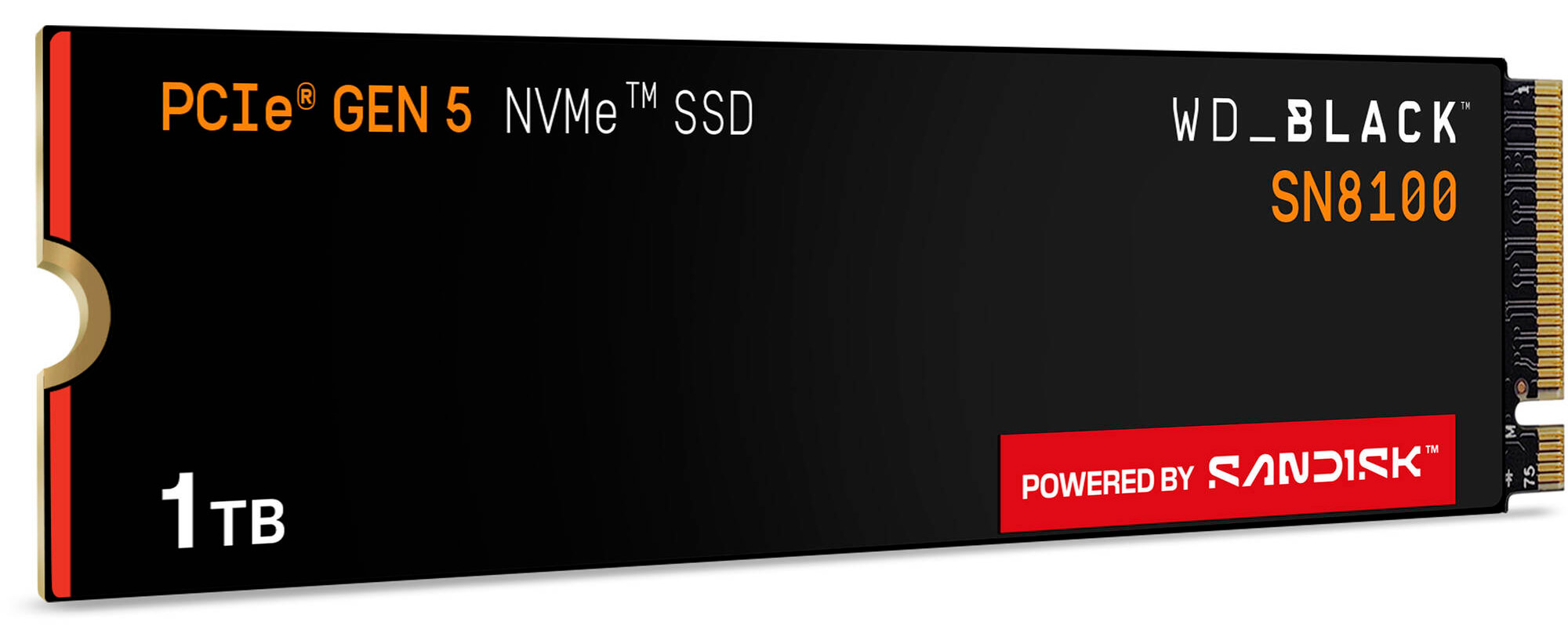
WD 4TB WD_BLACK SN8100 NVMe PCIe 5.0 M.2 Internal SSD
WD 4TB WD_BLACK SN8100 NVMe PCIe 5.0 M.2 $1299 / I paid just over half as much

Increasing Manufacturing Capacity?

While I can't confirm this information as I'm not in the industry, new facilities to manufacture this stuff can take up to two years to get rolling. There is no immediate relief coming.

Compact Cameras

There are going to be a lot of compact cameras coming in 2026. Some of those cameras are going to use Micro-SD cards. DJI already uses these cards in most of their consumer drones. The supply of MicroSD cards is going to be stressed.

There is a real possibility that supply for consumers is going to completely dry up. I don't think that's hyperbole. We can't know for sure, but the extreme price hikes are starting to take shape.

I'm not telling you how to spend your money, but if you think you're going to need more storage in any capacity, I would be working that into your business plans as well as your own personal needs for cameras, computers, tablets and a lot of other products.

Older stock is still out there, but once it's gone we're going to see things double or triple in price.

Again, I'm not claiming to be the foremost expert. I'm happy that I felt this was coming and didn't have to pay the new prices on M.2 & SSD RAID drives along with my RAM purchase last year.

As always, consumers can't have nice things when industries go sideways.

Shop Memory Cards

Go to discussion...

Share This Article
Craig is the founder and editorial director for Canon Rumors. He has been writing about all things Canon for more than 17 years. When he's not writing, you can find him shooting professional basketball and travelling the world looking for the next wildlife adventure. The Canon EOS R1 is his camera of choice.

45 comments

  1. I work in the tech world and can say that Cisco, Dell, HP...all the big hardware players have been severely impacted by this. One project I'm working on involved $1.5m worth of blade servers from one such company, to be delivered in the next few months. This was an order that had been placed and committed to, by a major global company that I suspect many people here would recognize. The supplier came back recently and started pushing the delivery date out. Ultimately they came back with three options:

    1. Cancel the order entirely.
    2. Cancel the order and resubmit at a much higher price ($2.5m) but still with no firm delivery date set.
    3. Keep the current order & current pricing but with the understanding that it probably wouldn't be fulfilled until mid or late 2027 at the earliest, and maybe not until sometime in 2028.

    This is impacting everyone, and it will get worse before it gets better. Protect your computers with UPSes and expect to not upgrade or replace anything for the next ~2.5 years unless there is a dramatic & unexpected change in the market. Personally I'm going to be hosting most of my personal work off my home server for the foreseeable future. Thankfully I have uncapped fiber that is faster than most people could dream of, but it's still far from an ideal situation.

    In other bad news, the massive increase in hardware costs is almost certain to result in job losses. When new projects can't move forward, the result will not be good for employees.
    • 0
  2. I work in the tech world and can say that Cisco, Dell, HP...all the big hardware players have been severely impacted by this. One project I'm working on involved $1.5m worth of blade servers from one such company, to be delivered in the next few months. This was an order that had been placed and committed to, by a major global company that I suspect many people here would recognize. The supplier came back recently and started pushing the delivery date out. Ultimately they came back with three options:

    1. Cancel the order entirely.
    2. Cancel the order and resubmit at a much higher price ($2.5m) but still with no firm delivery date set.
    3. Keep the current order & current pricing but with the understanding that it probably wouldn't be fulfilled until mid or late 2027 at the earliest, and maybe not until sometime in 2028.

    This is impacting everyone, and it will get worse before it gets better. Protect your computers with UPSes and expect to not upgrade or replace anything for the next ~2.5 years unless there is a dramatic & unexpected change in the market. Personally I'm going to be hosting most of my personal work off my home server for the foreseeable future. Thankfully I have uncapped fiber that is faster than most people could dream of, but it's still far from an ideal situation.

    In other bad news, the massive increase in hardware costs is almost certain to result in job losses. When new projects can't move forward, the result will not be good for employees.

    Thanks for the input, it's worse than I thought it was and going to be. I hadn't thought about the impact to employment.

    I'm currently negotiating paying for hosting 2 years up front. Even electricity is going to go up and that's a big cost. For those that don't know, you pay for CPU and GPU wattage use. I changed processors recently to cut that by half. You can go Ampere arm, but the processors cost double, so the offset in costs is 0.
    • 0
  3. Thanks for the input, it's worse than I thought it was and going to be. I hadn't thought about the impact to employment.

    I'm currently negotiating paying for hosting 2 years up front. Even electricity is going to go up and that's a big cost. For those that don't know, you pay for CPU and GPU wattage use. I changed processors recently to cut that by half. You can go Ampere arm, but the processors cost double, so the offset in costs is 0.
    Yeah, sh-t's going crazy, and we're just at the start.
    • 0
  4. This may be odd, but I feel bad for the kids that want to build gaming rigs. I remember spending every penny I made one summer doing my first one. Some of the PC builder groups are therapy sessions at this point.
    • 0
  5. This is different but it reminds me of COVID: procuring blades for data centers was an issue during COVID due to supply chain disruptions and unless you were a protected business (i.e. health care or defense) you had to wait or to pay more.

    Not only computers and memory cards, but also cars, drones, home appliances, phones are all full of chips and memory. All will be affected.
    We may see a return of "dumb" appliances and less gizmos in cars. I have already tried and configuring a desktop the way I like it is becoming prohibitively expensive.
    There are all sorts of side effects to this. Taiwan may become more appetizing to China given how much of worldwide chip production is there....

    So much money has been pumped in AI and in the infrastructure for AI that they have to keep investing in it otherwise it will all unravel and a lot of companies will lose a lot of money. So this is going to go on for a while, at least until AI shows some real return to those investments.

    The big hyperscalers (AWS, Microsoft, Google, possibly including Nvidia, Meta and Apple and Samsung) will be ok because they command large %'s of the market. All the rest will suffer. Camera makers are small bit players in this context, so they will be impacted
    • 0
  6. The big hyperscalers (AWS, Microsoft, Google, possibly including Nvidia, Meta and Apple and Samsung) will be ok because they command large %'s of the market. All the rest will suffer. Camera makers are small bit players in this context, so they will be impacted
    Everyone is affected. The hyperscalers and other large companies are paying huge money for memory too, they just pass the costs along. Apple for example dropped the 512GB config of the Mac Studio Ultra, now the largest you can order is 256GB. Next generation M5 Mac Studios will probably have a price bump and may also be limited to 256GB of memory.

    Samsung's memory division has made it clear that their own phone division is facing the same pricing as everyone else. Apple sent top execs to camp out in Seoul to try to negotiate access and pricing, with little apparent success.

    The AI bubble popping would likely trigger pricing resets, but with so much of the US equity markets made up of the top AI/tech companies now (and likely to get worse with upcoming IPOs), the end of the AI bubble would bring about other huge problems. We may end up just being stuck with this for a couple of years until more capacity comes online around 2028.
    • 0
  7. Prices have been skyrocketing for about half a year now. Everything currently costs roughly twice as much as it did at the beginning/mid of 2025, whether it's hard drives, CFexpress cards, or SD cards.
    Good thing I stocked up in time, but eventually that will run out too. I hope things will return to normal by 2028 at the latest, better 2027...
    I found it interesting that Apple didn’t make its new M5 MacBook Pro more expensive than the M4. Normally, they would have had to raise prices by at least 20–30%, if not even more.
    • 0
  8. I found it interesting that Apple didn’t make its new M5 MacBook Pro more expensive than the M4. Normally, they would have had to raise prices by at least 20–30%, if not even more.
    The base price of the M5 Pro MBP did go up by $200, though. I suspect that if the rumored redesign for the M6 happens, there will be a fairly steep price increase at that point.
    • 0
  9. Everyone is affected. The hyperscalers and other large companies are paying huge money for memory too, they just pass the costs along. Apple for example dropped the 512GB config of the Mac Studio Ultra, now the largest you can order is 256GB. Next generation M5 Mac Studios will probably have a price bump and may also be limited to 256GB of memory.

    Samsung's memory division has made it clear that their own phone division is facing the same pricing as everyone else. Apple sent top execs to camp out in Seoul to try to negotiate access and pricing, with little apparent success.

    The AI bubble popping would likely trigger pricing resets, but with so much of the US equity markets made up of the top AI/tech companies now (and likely to get worse with upcoming IPOs), the end of the AI bubble would bring about other huge problems. We may end up just being stuck with this for a couple of years until more capacity comes online around 2028.
    The whole AI thing is a financial house of cards. Lots of "commitments", but very little cash changing hands. AI profitability is still as much of a dream as a high-speed train in California. Seems almost certain that there will be a crash and, given the amount of money involved, it could be much worse than the dot com bust. For the short term, I lucked out by upgrading all my computers for the Windows 10 EOL. Just made it under the wire before prices started to climb. If the shortage does continue, we may actually see some focus on software efficiency instead of just more and bigger.
    • 0
  10. Looking at portable SSD prices on Amazon, prices for Samsung and SanDisk drives have gone up 60-100% in the past 3 months. However, perhaps because Micron retired the consumer-focused Crucial brand last month, prices for Crucial SSDs have only gone up <10%. A Crucial X10 8 TB SSD is $785, compared to $1135 for the 8 TB SanDisk or $750 for the 4 TB Samsung T7 Shield (their largest capacity). I don't 'need' them right now, but a pair of 8 TB Crucial X10 SSDs will be delivered by Amazon tomorrow because I might need them at some point in the foreseeable future, and I don't see prices coming down any time soon.
    • 0
  11. I was lucky to be able to buy a computer, new camera, and flash storage before the rising of prices. I wanted to buy new HDD as well, but those will have to and can wait.
    For someone starting in 2026 it will be rough. Cameras are small fishes and in comparison our problems are minors, but for someone that enjoy gaming playing in high quality will not be an option anymore.
    • 0
  12. Does anybody actually think AI is worth it? I don't, for the most part. I'm sure there's some good that can come from it but it seems like a lot of bad stuff. That being said, I don't know all of the uses, so I'm curious of others opinions or knowledge on the matter.
    • 0
  13. Does anybody actually think AI is worth it? I don't, for the most part. I'm sure there's some good that can come from it but it seems like a lot of bad stuff. That being said, I don't know all of the uses, so I'm curious of others opinions or knowledge on the matter.
    For image creation, the core of this forum, absolutelly not. For general old knowledge, expensive energy wise but worth it depending on the reader. Recent stuff, dangerous. Grammar checking, its only real usage that fits the design principles of the technology.
    • 0
  14. @Canon Rumors as someone with 128GB ram, what the heck are you doing with 256?? lol. I can't think of anything requiring that other than large scale FEA/CFD simulations really.

    But yeah, my mega-build from late 2024 would now cost almost 2.5x as much as it did. RAM, GPUs, and m.2 SSDs all have had crazy inflation.

    All for worthless generative AI models run by a bunch of companies that don't make a profit and have no remotely plausible path to profit. And we're still pretty far from the bubble popping.
    • 0
  15. Does anybody actually think AI is worth it? I don't, for the most part. I'm sure there's some good that can come from it but it seems like a lot of bad stuff. That being said, I don't know all of the uses, so I'm curious of others opinions or knowledge on the matter.
    No, AI has been mostly terrible for me. I remember googling information about the difference between my drone and the previous model and it was telling me that my drone wasn't rumoured to be released for months. Obviously AI had just regurgitated the information from someone's blog post. I can't tell you how many times the information has been incorrect and others have found it simply making up data. However where it's good at is taking a transcript for a meeting and generating action items which has saved me hours at my work. People are starting to use it for recruiting so who knows what sort of biases that will introduce.

    Personally I try to stay away from it as much as possible but I will admit that it creates some great memes!
    • 0
  16. Does anybody actually think AI is worth it? I don't, for the most part. I'm sure there's some good that can come from it but it seems like a lot of bad stuff. That being said, I don't know all of the uses, so I'm curious of others opinions or knowledge on the matter.
    It depends on what the AI is being used for. All the hype is around artificial image creation and getting answers from the likes of Chat GPT. Neither of those are worth much, nor are likely to monetize well. I have a fairly small computer with an Intel B50 graphics card in it that I set up to do local AI. It will do most of the image generation that the big dogs do and Intel AI Playground is free for the loading, which really challenges the likelihood of huge data center monetization. Now the places where AI is useful. Nearly all modern cameras are using some form of AI to assist with autofocus and the relative improvement in AF over the last few years has been huge. If you do serious processing of photos, the Topaz suite (which uses AI extensively) is pretty much a must have, particularly if you shoot in difficult conditions at high ISO. The noise reduction and sharpening tools are unmatched. Even Adobe is using AI for noise reduction and object removal in Lightroom Classic. That is just in our little neck of the woods. You can question the value of the feature, but Tesla self-driving cars actually do work remarkably well. At the other end of the spectrum (and maybe the only place the data centers could see real revenue), AI driven warfare is currently being demonstrated and will only increase in capability in the future. That one is more than a little scary. In the end, I don't see any applications for AI that are going to pay for the enormous cap ex that is being thrown at data centers, not to mention the power bills. Virtually all the useful applications for AI to date are distributed functions that don't need data centers, except possibly once for training.
    • 0

Leave a comment

Please log in to your forum account to comment